
Kawai Piano Values (2026): What They're Worth, Prices & Used Kawai Pianos for Sale
Kawai prices right now: 200 priced Kawai pianos listed on US Piano Connection ask $648 to $185,000, median $8,995 (live, refreshed hourly). Prices by model · Free appraisal
Kawai is Japan's other piano giant, and among technicians it's something of an open secret: comparable quality to its more famous rival, usually at a friendlier price. Founded in 1927 by a former Yamaha engineer, Kawai has spent decades innovating on the action — the mechanical heart of the piano.
Kawai's signature is its ABS-composite action parts, which shrug off the humidity swings that make wooden actions sticky and uneven. On the used market that translates to instruments that stay consistent with less fuss — and prices that make them one of the best values in used pianos.
What Kawai pianos are worth in 2026
Median asking
$8,995
Lowest
$648
Highest
$185,000
Live asking prices from 200 priced Kawai listings on US Piano Connection right now, refreshed hourly. Dealer asking prices include prep work, warranty, and delivery; a private sale realistically brings 60–70% of the median for an ordinary example in good condition. The model ranges below narrow that down.
Compare Kawai against every major brand or get a free appraisal for your Kawai.
What Kawai is known for
- Warmer, rounder tone than the typical Japanese brightness — often described as closer to European voicing
- ABS/carbon composite action parts that resist humidity and stay consistent for decades
- K-series uprights and RX/GX grands that routinely undercut equivalent rivals on price
- Excellent digitals (CA/CN series) using real wooden-key actions
Popular used Kawaimodels & prices
Kawai K-series uprights (K-200–K-500)
$3,000–$8,000 usedThe direct U-series competitor. A used K-300 (48") is one of the best value-per-dollar uprights you can buy; the K-500 adds grand-like depth.
Kawai RX-series grands (RX-1–RX-7)
$9,000–$25,000 usedThe workhorse grand line of the 1990s–2000s, later succeeded by GX. An RX-2 (5'10") is a favorite teacher's grand; RX-3 and up fill bigger rooms.
Kawai GX-series grands
$15,000–$40,000 usedThe current premium line with stretched-length designs and refined Millennium III actions. Recent used examples are near-new for thousands less.
Kawai GL/GM baby grands
$6,000–$14,000 usedCompact grands with honest actions at entry prices — a smart first grand.
Ranges are typical asking prices for privately sold and dealer-restored instruments in the U.S.; condition, age, and restoration quality move prices substantially.
Live Kawai model prices, 2026
Every Kawai model with priced listings on US Piano Connection right now, refreshed hourly. The median is the number to anchor on; the low end is usually the oldest or most-played example and the high end a recent, fully rebuilt or lightly used instrument.
| Model | Listed | Years | Low | Median | High |
|---|---|---|---|---|---|
| Kawai GL-10 | 6 | 2022 | $12,895 | $12,895 | $19,900 |
| Kawai GE-1 | 6 | 1987–1996 | $5,950 | $8,122 | $8,990 |
| Kawai CX-21D | 4 | 1993–1999 | $3,300 | $4,498 | $5,295 |
| Kawai 506N | 4 | 2014–2022 | $2,999 | $4,497 | $4,699 |
| Kawai RX-3 | 3 | 1996–1998 | $10,250 | $15,840 | $19,000 |
| Kawai New Kawai Upright K-300 (4'0") | 3 | — | $11,300 | $11,700 | $13,206 |
| Kawai GM-10 | 3 | 2002–2005 | $9,990 | $9,995 | $12,999 |
| Kawai GE | 3 | 1986–2003 | $8,390 | $8,390 | $11,990 |
| Kawai KG-2C | 3 | 1978 | $4,999 | $8,390 | $13,500 |
| Kawai ST-1 | 3 | 2024–2025 | $6,499 | $7,672 | $8,395 |
| Kawai New Kawai Grand GL-30 (5'5") | 2 | — | $29,895 | $36,595 | $43,295 |
| Kawai GL-20 | 2 | 2016–2019 | $15,500 | $16,700 | $17,900 |
Asking prices, not sale prices. Dealer listings include prep and often a warranty; expect a private sale to close below the median for an ordinary example of the same year.
Kawai pianos for sale now
 DealerGood Deal
1989 Kawai KG-1E
Mesa, AZ
Grand
 Stilwell Pianos
Nationwide Delivery Available
$8,990
View details DealerFair Deal
1988 Kawai RX-2
Mesa, AZ
Grand
Stilwell Pianos
Nationwide Delivery Available
$14,490
View details DealerGood Deal
1983 Kawai 803F
King of Prussia, PA
Upright
 Cunningham Piano
Nationwide Delivery Available
$2,790
View details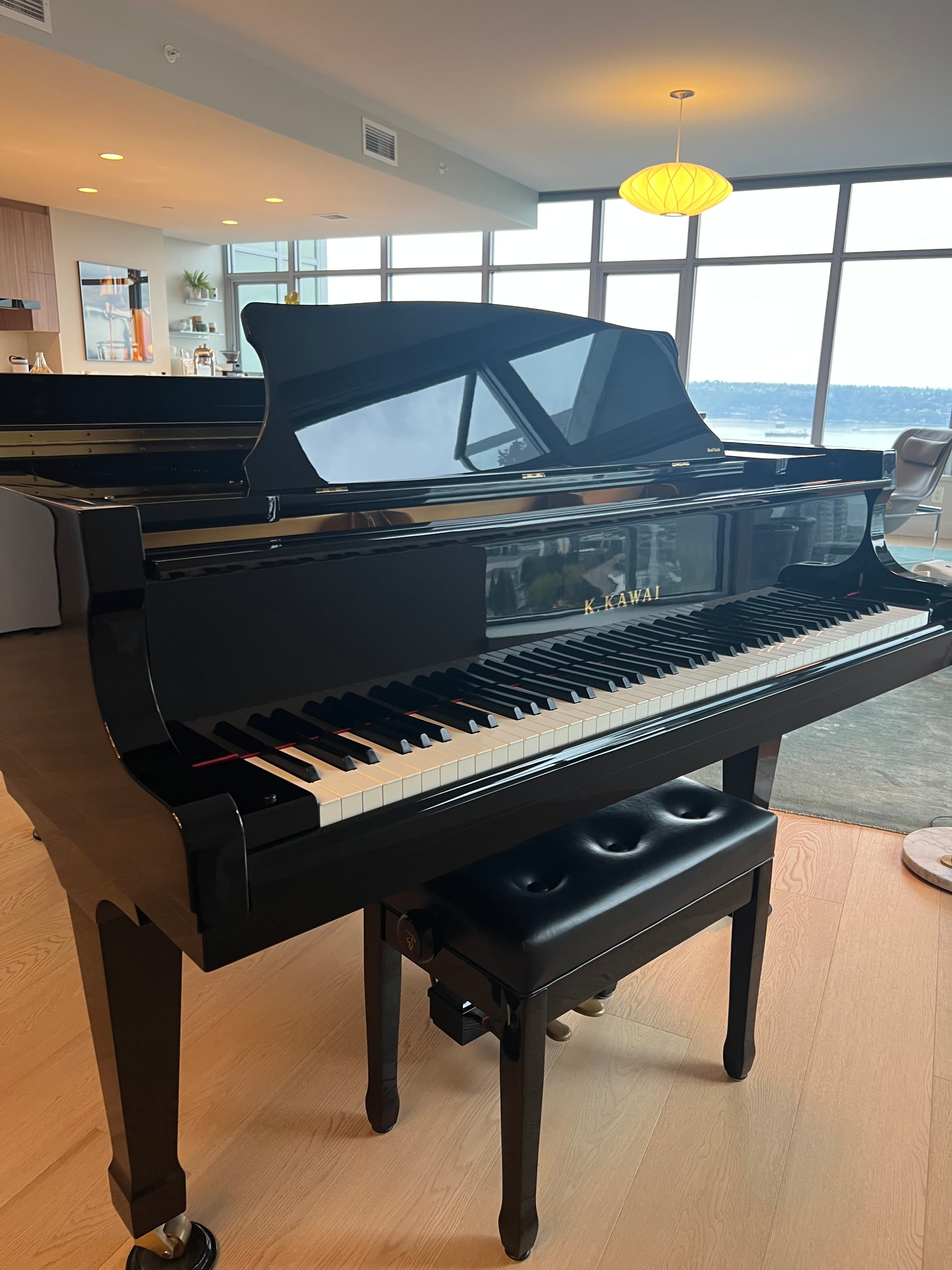
kawai rx-3
Seattle, WA
Upright · Excellent condition
Nationwide Delivery Available
$19,000
View details DealerGood Deal
1999 Kawai CX-5H
Bellevue, WA
Upright
 Classic Pianos Seattle
Nationwide Delivery Available
$3,490
View details DealerGood Deal
2024 Kawai ST-1
San Antonio, TX
Upright · Good condition
 Alamo Music Center
Nationwide Delivery Available
$6,499
View details Dealer
1985 Kawai KG-7D Semi-Concert
Alpharetta, GA
Grand · Good condition
 World Class Piano Gallery
Nationwide Delivery Available
$22,950
View details Dealer
Kawai CA901
Alpharetta, GA
Digital · Good condition
World Class Piano Gallery
Nationwide Delivery Available
$4,950
View details Dealer
2009 Kawai K-5
White Plains, NY
Upright
Faust Harrison Pianos
Nationwide Delivery Available
$7,990
View details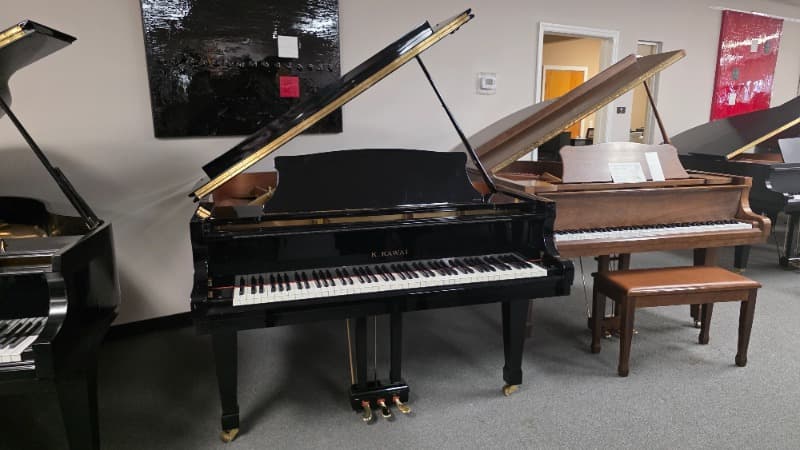 DealerFair Deal
1996 Kawai RX-3
Melbourne, FL
Grand · Good condition
 Atlantic Music Center
Nationwide Delivery Available
$15,840
View details Dealer
Kawai New Kawai Upright K-400 (4'0")
Pine Brook, NJ
Upright
 Lindeblad Piano Restoration
Nationwide Delivery Available
$13,600
View details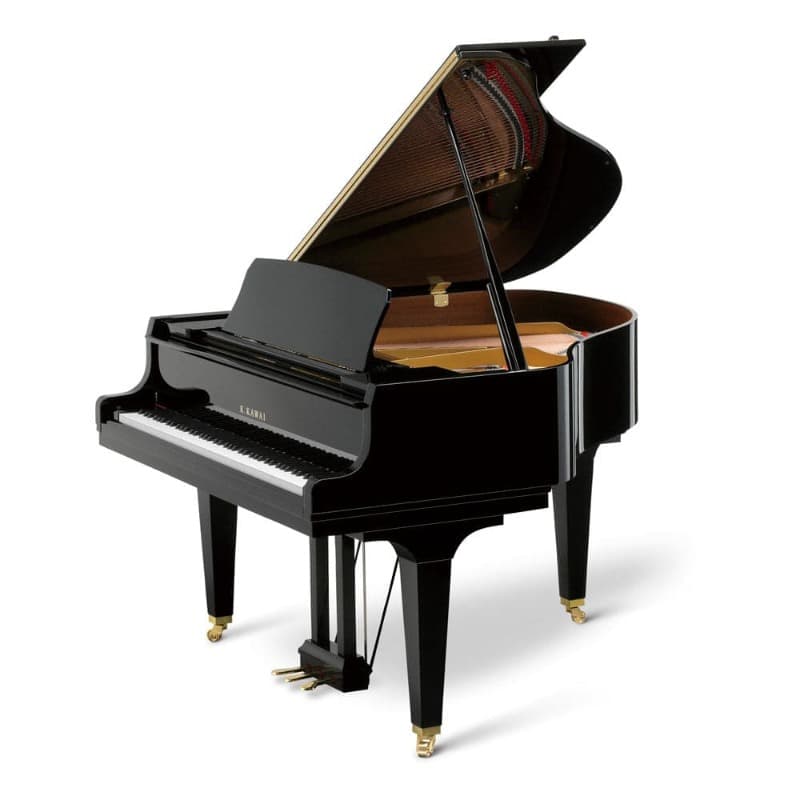 Dealer
Kawai GL-10
Melbourne, FL
Baby grand · Excellent condition
Atlantic Music Center
Nationwide Delivery Available
$12,895
View detailsBuying a used Kawai: what to check
- Don't let anyone scare you off 'plastic parts' — Kawai's ABS action components are a proven upgrade, not a cost cut, and technicians widely respect them
- K-series and RX-series pianos from the 1990s onward are the safest used buys; confirm the model and year via the serial number
- Listen for Kawai's darker voicing and decide if it suits you — players coming from bright pianos sometimes need a session to appreciate it
- As with any used piano, a $150–$250 technician inspection before purchase is the best money you'll spend
Frequently asked questions
Kawai vs. Yamaha — which used piano should I buy?
Condition beats brand at this level. Broadly: Yamaha runs brighter, Kawai warmer; Kawai often costs 10–20% less used for equivalent quality. Play both and buy the better-maintained instrument.
Are Kawai's plastic action parts a problem?
No — the opposite. Kawai's ABS (now carbon-infused) parts don't swell or shrink with humidity like wood, so the action stays more consistent over time. It's been standard on their pianos for 50 years.
Selling a Kawai piano?
Start with how much is my piano worth? for live values, run a free instant appraisal, then list it free on US Piano Connection and reach buyers nationwide — read our guide to selling your piano or start your listing.